
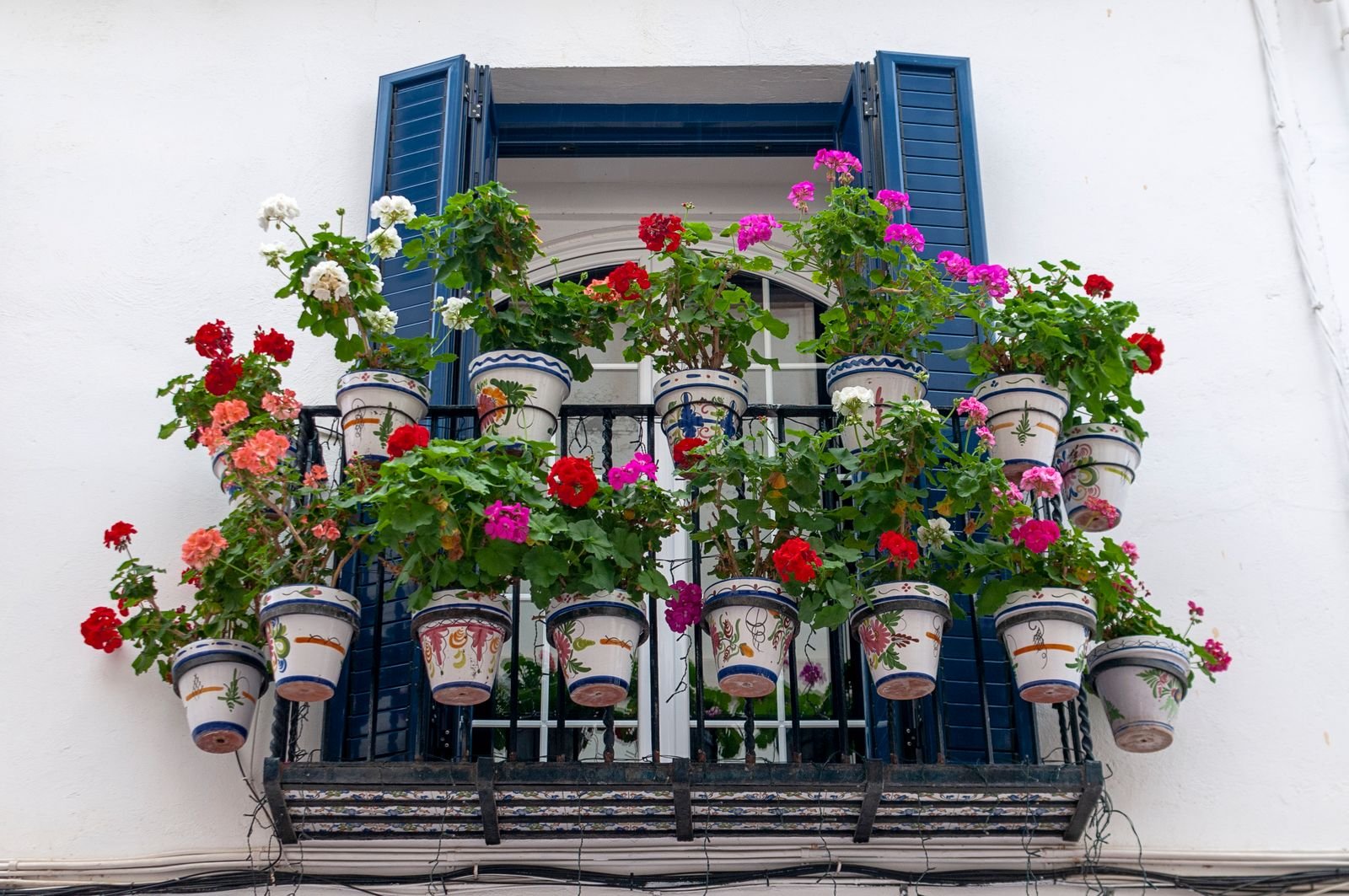
A small balcony does not mean a small garden. When floor space runs out, the walls are still empty — one sunny wall can hold more plants than the floor below it. Vertical gardening is growing upwards: planters on walls, climbers on trellises, pots on rails and shelves in tiers.
This guide covers five practical designs, the checks to do first, plants for sunny and shady walls, and watering without flooding your balcony — or the neighbour's below.
Why Vertical Gardening Works in Small Spaces
 img2-15758634.jpg 364.25 KB
Growing upwards multiplies your planting area without touching the floor. A wall 2 metres wide and 2 metres high offers 4 square metres of growing space. Plants at eye level are easier to water, prune and harvest.
A green wall also cools a hot balcony, and climbers soften bare railings and add privacy.
Before You Start: Light, Weight and Water Checks
 img3-37554726.jpg 246.42 KB
Three checks decide which design will work. First, light: count the hours of direct sun your wall gets. Six or more is a sunny wall (herbs, chillies, most flowers); three to six is part shade; under three, plan for ferns and mint.
Second, weight. Wet soil is heavy — a 40 cm pot of damp compost can weigh 8–10 kg. Fix into brick or concrete with proper wall plugs, never into plaster alone, and spread railing loads across several points. Third, water: every vertical system drips, so plan drainage — trays under the lowest row, nothing pouring onto the balcony below.
Idea 1: Wall-Mounted Planters and Pocket Gardens
 img4-5958769.jpg 634.92 KB
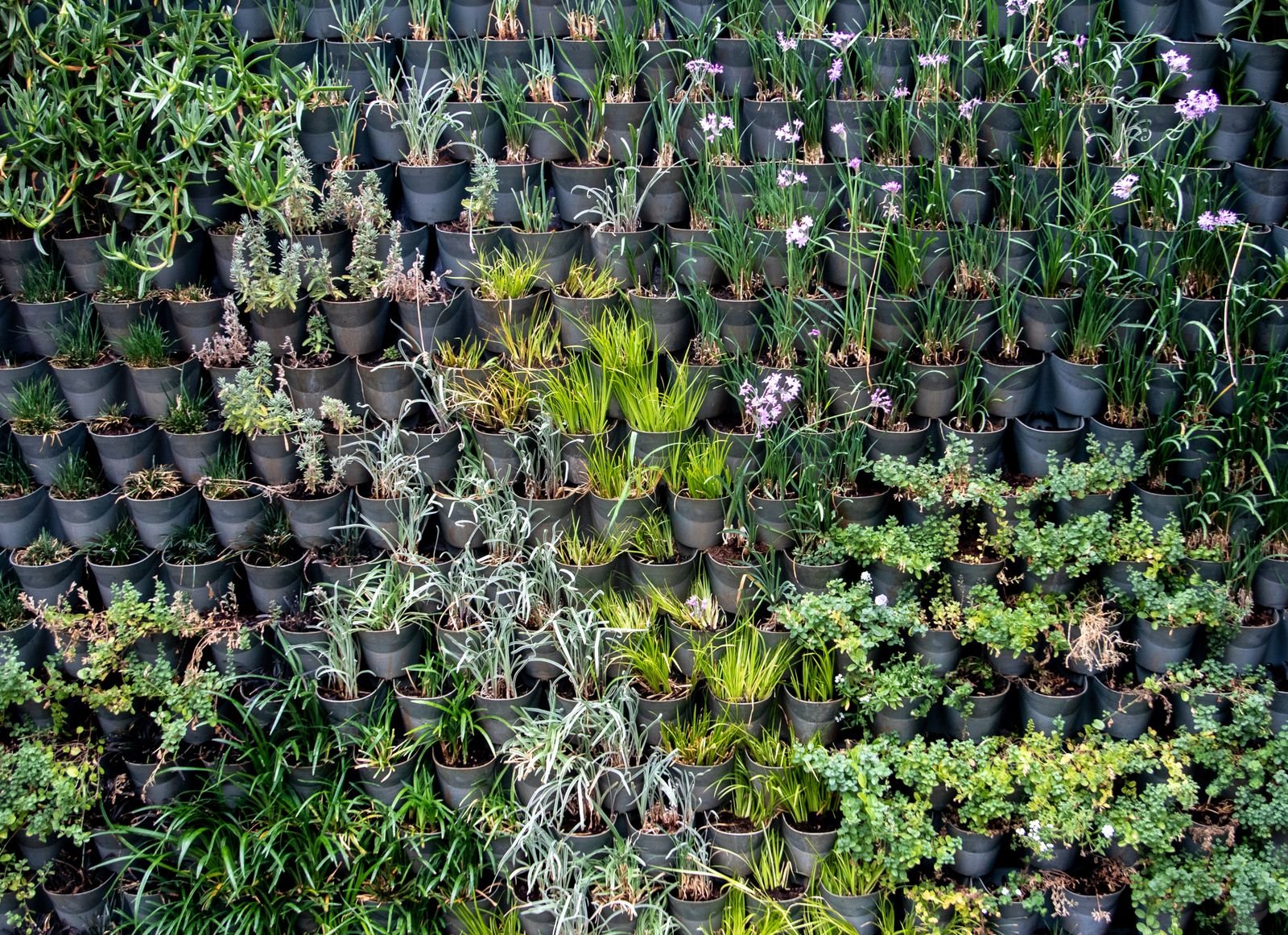
The fastest vertical garden is planters fixed directly to the wall. Individual wall pots (15–20 cm across) suit herbs and small flowers. Fabric pocket planters — rows of stitched pockets on a hanging sheet — hold more: a panel of 12–36 pockets turns one wall into a herb garden, though pockets dry out quickly and suit shallow-rooted plants best.
Space planters 30–40 cm apart vertically so each plant gets light. Put drought-tolerant plants in the top row, where they dry fastest. Renters should look for hook-on versions that need no drilling.
Idea 2: Trellis and Climbing Plants
 img5-9852655.jpg 1 MB
A trellis is the cheapest vertical garden of all: one panel, one climber, and the plant does the decorating. Fix it 5–10 cm away from the wall so air circulates behind the leaves, preventing damp patches and giving tendrils room to wrap. A 60 × 180 cm panel is a good standard balcony size.
Train stems loosely with soft ties, guiding them sideways as well as up. Good climbers for pots include star jasmine (fragrant, evergreen), climbing beans and peas for a fast edible screen, bougainvillea for hot sunny walls, and ivy for shade — kept in its pot. Most climbers need a pot at least 30–40 cm deep at the base.
Idea 3: Shelves, Ladders and Tiered Stands
 img6-8989419.jpg 244.82 KB
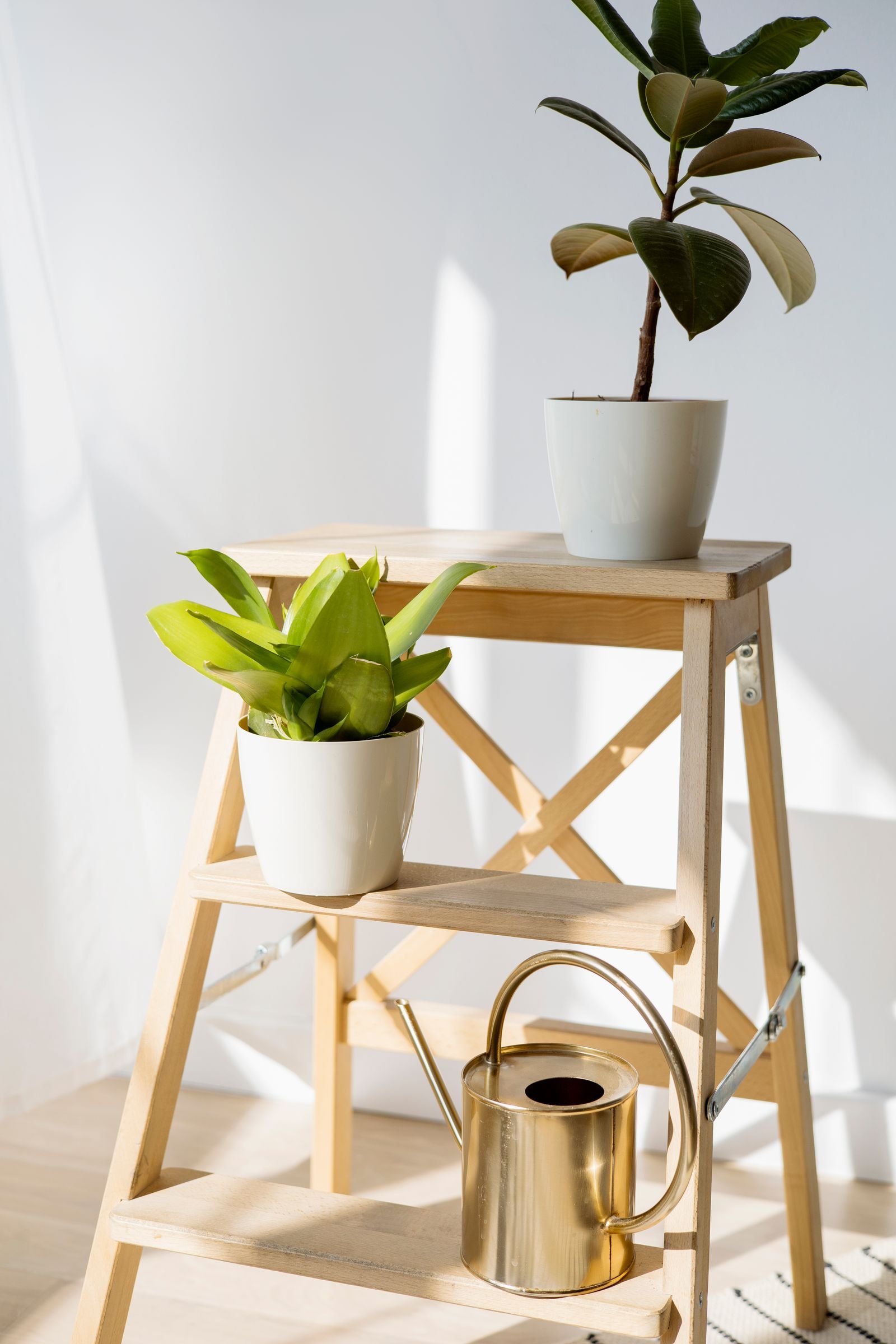
If drilling is not an option, ladder shelves and tiered stands give you vertical layers that stand on the floor. A three-tier stand 80 cm wide holds 9–12 medium pots in the footprint of three. Put tall plants at the back, trailing plants on the edges to spill over, and heavy pots low for stability.
Shelves are the most flexible system — they move with the sun and rearrange in minutes. But top shelves shade the ones below, so rotate pots every few weeks.
Idea 4: Hanging Pots and Rail Planters for Balconies
 img7-5483961.jpg 315.88 KB
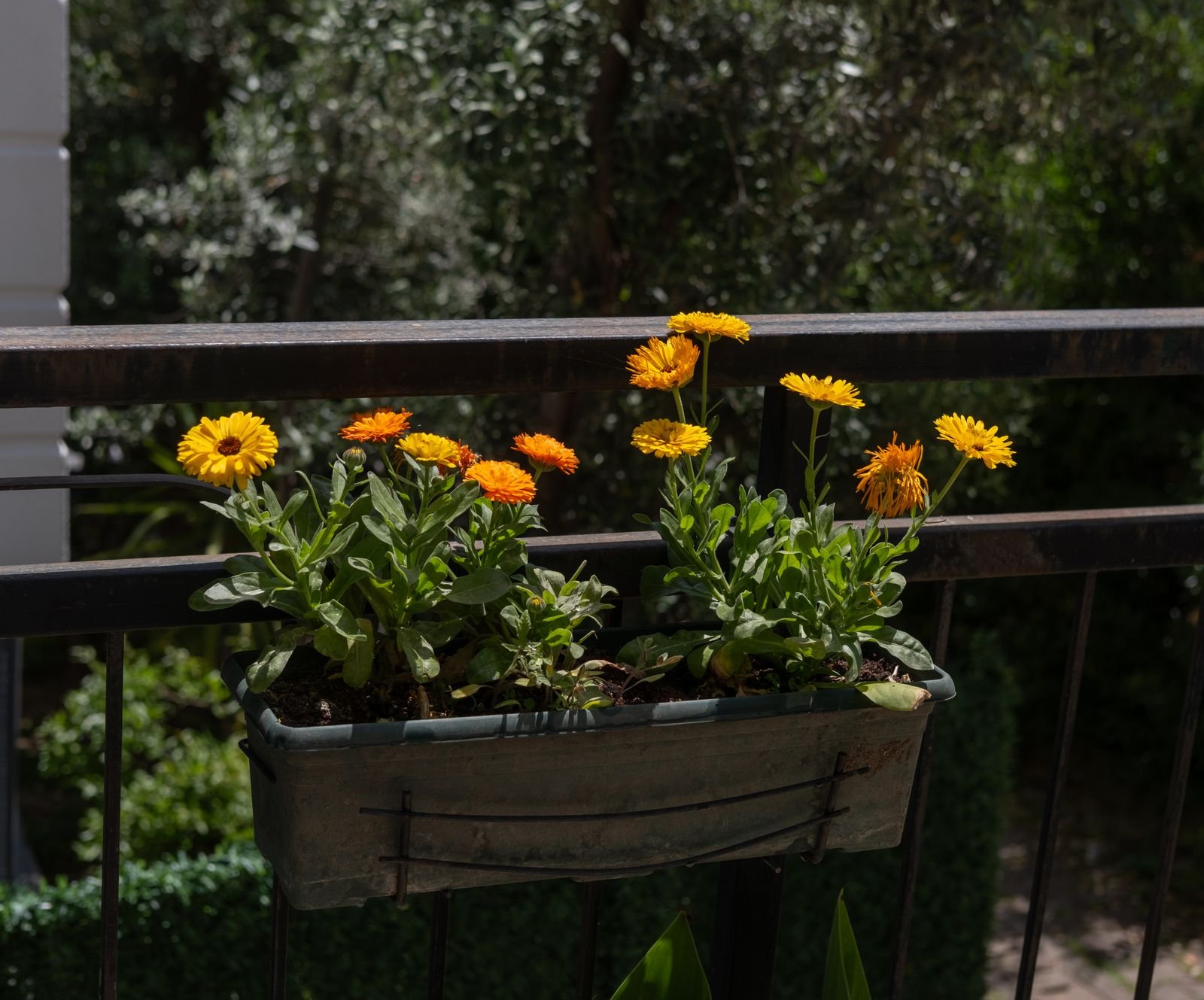
Balcony rails are growing space. Rail planters that hook or clamp over the railing (40–60 cm long) hold flowers and herbs where the sun is, and hanging baskets add a second layer above. Keep hanging pots at head height or higher, never over a walkway.
Weight matters most here: a watered 30 cm hanging basket can reach 6–8 kg, so use rated fixings and check hooks each season for rust. Trailing plants are made for this job — petunias, trailing geraniums (pelargoniums), lobelia and sweet potato vine for sun; fuchsia, begonias and string of pearls for shade. Expect to water daily in hot weather.
Idea 5: A Living Green Wall (Modular Panels)
 img8-12506728.jpg 488.13 KB
Modular green wall systems — interlocking plastic or felt panels with planting cells, usually 50 × 50 cm per module — create the "living wall" look. Many include a watering channel that feeds each row from one inlet at the top.
They are also the biggest commitment: heaviest when saturated, priciest per square metre, and least forgiving if watering is neglected, because each cell holds little soil. Start with two to four modules of tough foliage plants — pothos, ferns, spider plants, philodendron — and add more later.
Best Plants for Vertical Gardens
 img9-1660533.jpg 552 KB
Match the plant to the wall, not the other way round. For hot, sunny walls: rosemary, thyme, oregano, chillies, cherry tomatoes (in deeper pots), petunias, portulaca and bougainvillea. For shady walls: mint (always in its pocket — it takes over), parsley, ferns, begonias, fuchsia and pothos.
Herbs are the best beginners' choice: light, shallow-rooted, harvested constantly. For flowers, combine one trailing plant, one upright plant and one filler per group — the thriller-filler-spiller rule — so sections look full from the start.
Watering and Feeding Without the Mess
 img10-32541186.jpg 568.72 KB
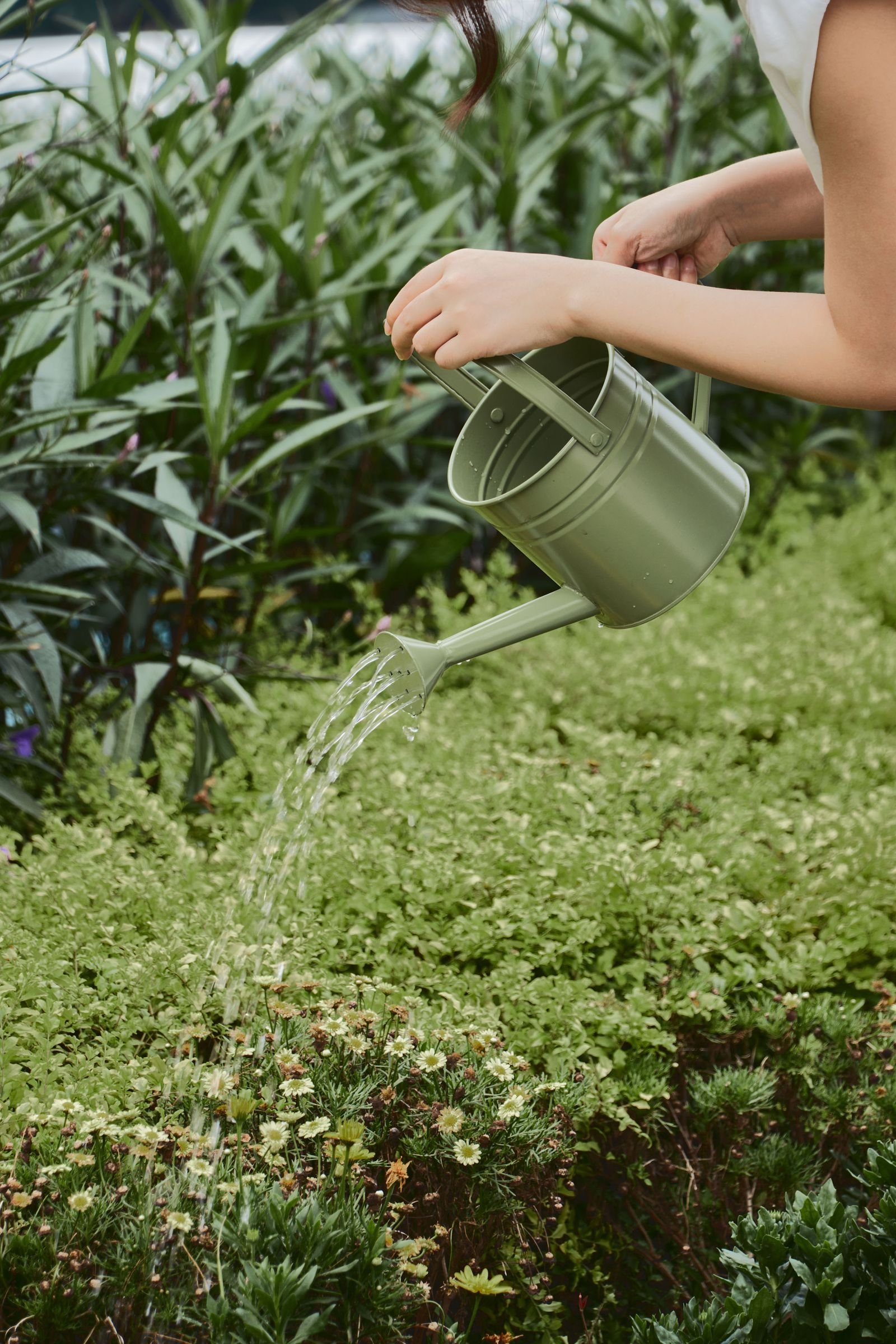
Vertical gardens dry out faster than floor pots — small soil volumes, more wind, more sun. In summer, pockets and small wall pots may need water daily, sometimes twice in a heatwave. Water slowly at the top and let it trickle down through the levels; a long-spout can or drip line is far less messy than splashing from above.
Catch runoff with drip trays under the lowest row. Feed little and often — a half-strength liquid feed every two weeks suits small soil volumes better than rare heavy doses. Self-watering planters stretch watering intervals from one day to three or four.
Common Vertical Garden Mistakes
 img11-4171983.jpg 558.7 KB
Most failures trace back to a short list. Fixing into plaster instead of masonry, so the row pulls out once the soil gets wet and heavy. Choosing plants for looks before checking the wall's sunlight hours. Cramming big plants into small pockets, where roots run out of room within a season. Forgetting drainage. And planting everything in one weekend with no watering routine — a vertical garden is a daily two-minute habit, not a one-time installation.
Avoid those five, start small, and expand once the first wall is thriving.
Frequently Asked Questions
Will a vertical garden damage my wall?
Not if it is fixed and drained properly. Use the right wall plugs for brick or concrete, keep an air gap behind trellises and panels, and control runoff so water does not soak the wall. Damage usually comes from water sitting against the surface, not from plants.
What is the best vertical garden option for renters?
Anything that needs no drilling: ladder shelves, tiered stands, clamp-on rail planters and hook-on pocket panels. They move out with you and leave the wall untouched.
How much weight can a balcony railing hold?
It varies with age and construction, so spread loads across several fixing points and keep planters modest — a watered 60 cm rail planter is roughly 8–12 kg. If the railing flexes or is rusted, use floor-standing tiers instead.
Which plants survive heat on a sunny wall?
Heat lovers with small or waxy leaves do best: rosemary, thyme, portulaca, bougainvillea, chillies and trailing geraniums. Even these need daily watering in small pockets during a heatwave — the soil volume, not the plant, is the limiting factor.