
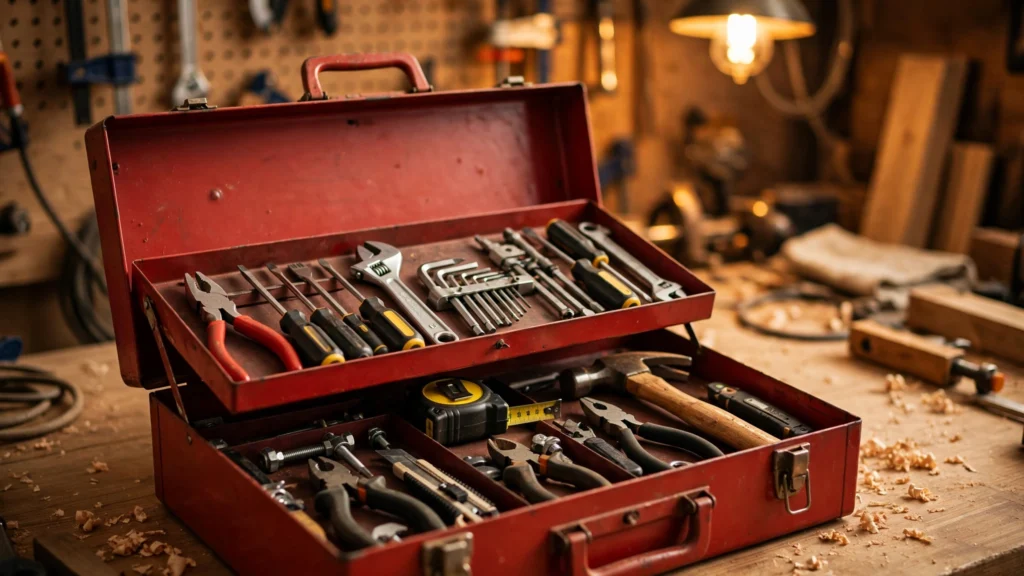

A toolbox is a box designed to organize, carry, and protect your tools — whether you’re a professional tradesperson, a DIY enthusiast, or someone who just wants the hammer to be findable when a picture needs hanging. But “toolbox” covers everything from a $20 plastic hand-carry box to a $700 truck-bed vault to stackable modular systems.
This 2026 guide covers every type of toolbox, steel vs plastic vs aluminum, what to look for when buying, price ranges, top brands, how to organize a toolbox like a pro, and the essential tools every beginner should own — plus a quick note on what “toolbox” means in software.
What Is a Toolbox?
At its simplest, a toolbox (also called a tool chest, workbox, or toolkit) is dedicated storage for tools. It keeps tools organized, portable, and protected from damage, moisture, and loss. The right one depends entirely on what tools you own, where you work, and how you move.
Types of Toolboxes Compared
| Type | What it is | Best for | Price range |
|---|---|---|---|
| Hand-carry / portable | Single handle, hinged lid, often a tote tray | Home use, mobile jobs | $20–$80 |
| Cantilever | Compartments fold out symmetrically when opened | Mechanics, service techs | $30–$100 |
| Tool chest (top box) | Multi-drawer cabinet; sits on bench or roller cabinet | Workshops, garages | $100–$300 |
| Rolling cabinet | Multi-drawer steel cabinet with casters | Garages, pro shops | $150–$500+ |
| Modular / stackable system | Click-together boxes: rolling base + drawers + organizers | Contractors, serious DIYers | $80–$200+ |
| Truck bed toolbox | Crossover/saddle, side-mount, underbody boxes | Truck owners, trades | $150–$700 |
| Portable organizers | Small-parts cases with dividers | Screws, bits, fasteners | $10–$40 |
| Tool bag | Soft-sided carry bag | Light mobile work | $20–$120 |
Hand-Carry vs Rolling: Which Do You Need?
- Hand-carry: you work in different spots (around the house, helping neighbors). Light, simple, cheap.
- Rolling cabinet: you have a dedicated workspace (garage, shop) and a growing collection. Heavy tools live here permanently.
- Modular system: you want both — stack what you need, roll it to the truck, leave the rest.
Truck Bed Toolboxes
- Crossover (saddle): spans the bed behind the cab — the classic; most storage, blocks some bed space.
- Side-mount: sits on the bed rails — keeps the floor clear.
- Wheel-well / underbody: uses dead space; lower profile.
- Key buying factors: latch type (push-button vs paddle), gasket quality (hollow-formed rubber outlasts foam), steel vs aluminum.
Materials: Steel vs Plastic vs Aluminum
| Material | Strengths | Weaknesses | Best for |
|---|---|---|---|
| Steel | Strongest, most secure, professional feel | Heavy; can rust if paint scratches | Pro workshops, rolling cabinets |
| Plastic (HDPE/resin) | Lightweight, rust-proof, affordable | Can crack under extreme stress | Home use, damp environments |
| Aluminum | Strong, corrosion-resistant, lighter than steel | Pricier | Truck boxes, premium portable |
| Wood | Beautiful, traditional | Heavy, not weatherproof | Heirloom / luxury chests |
Which is better — steel or plastic? For a garage that never moves: steel. For carrying tools around the house or in a damp basement: plastic. For a truck bed: aluminum (strong, won’t rust, ~50 lbs lighter than steel).
What to Look for When Buying a Toolbox
- Size and capacity: buy slightly bigger than your current collection — tool collections only grow.
- Build quality: check the gauge of steel, the thickness of plastic, and the sturdiness of hinges.
- Storage layout: drawers for small tools, deep wells for power tools, removable trays and dividers for organization.
- Drawer slides: look for ball-bearing slides rated ~50 lbs+ per drawer; avoid plastic slides on anything heavy.
- Latches and locks: lockable latches or padlock points — essential for truck boxes and shared spaces.
- Portability: handle comfort, wheel quality (big wheels roll over thresholds), and total weight when loaded.
- Weatherproofing: for outdoor/truck use — look for bulb or hollow-formed rubber seals (foam gaskets deteriorate).
- Expandability: modular lines (Milwaukee Packout, DeWalt ToughSystem, Ryobi Link) let you add pieces over time.
- Warranty: lifetime warranties are common on quality boxes — a good sign of manufacturer confidence.
Top Toolbox Brands (2026)
| Brand | Known for | Price tier |
|---|---|---|
| Milwaukee (Packout) | Modular stackable system; jobsite-tough | Mid–premium |
| DeWalt (ToughSystem/TSTAK) | Modular systems; contractor favorite | Mid–premium |
| Craftsman | Classic steel chests; great value | Budget–mid |
| Husky | Home Depot’s line; solid rolling cabinets | Budget–mid |
| Keter | Resin modular systems (Stack & Roll) | Budget–mid |
| Ryobi (Link) | Modular system for DIYers | Budget–mid |
| GearWrench | Mechanics’ chests and carts | Mid |
| Weather Guard | Premium truck bed boxes | Premium |
| Snap-on | Pro-grade; the Ferrari of tool storage | Premium+++ |
| Veto Pro Pac | Technician tool bags | Premium |
How Much Does a Toolbox Cost?
| Category | Typical range |
|---|---|
| Basic portable (plastic/steel) | $20–$80 |
| Rolling modular system | $80–$200 |
| Rolling tool chest | $100–$300 |
| Pro combo cabinet (chest + roller) | $500+ |
| Truck bed box | $150–$700 |
| Small-parts organizer | $10–$40 |
Value sweet spot: a $100–$200 rolling cabinet or modular starter set covers 90% of home DIY needs for a decade.
How to Organize a Toolbox Like a Pro
- Audit everything. Dump it all out. Discard broken tools, duplicates you’ll never use, and mystery screws.
- Group by type and function. Pliers together, ratchets together, files together. Separate SAE from metric — mixing them wastes hours.
- Organize by size and frequency. Small, often-used items on top; bulky, heavy items at the bottom. Alternate handle directions to save space.
- Use foam liners and dividers. Kaizen foam cutouts keep tools from sliding and show instantly what’s missing.
- Label everything. Drawer labels save more time than any other organization trick.
- Store extras elsewhere. The everyday box holds everyday tools; seasonal and specialty tools live in secondary storage.
- Maintain it. 5 minutes of “return tools to their homes” after each project beats an annual reorganization.
Essential Tools for a Beginner’s Toolbox
| Tool | What it’s for |
|---|---|
| Claw hammer | Nails in, nails out |
| Screwdrivers (flathead + Phillips, assorted) | 90% of fasteners |
| Combination wrenches (metric + standard) | Nuts and bolts |
| Adjustable wrench | Odd sizes, plumbing |
| Pliers (slip-joint, needle-nose, wire cutters) | Gripping, bending, cutting |
| Tape measure (25 ft) | Measuring everything |
| Level (torpedo or 2 ft) | Hanging things straight |
| Utility knife | Cutting, scoring, opening |
| Hex key set | Furniture assembly |
| Cordless drill/driver | Drilling + driving screws |
| Stud finder | Hanging heavy things safely |
| Safety glasses + work gloves | Protecting you |
| Flashlight / headlamp | Seeing in dark spaces |
Starter budget: ~$150–$250 covers this entire list at homeowner quality — plus the toolbox itself.
Toolbox Maintenance Tips
- Keep it dry. Moisture is the enemy — silica gel packs in drawers, and wipe tools with an oily rag before storing.
- Lubricate slides and latches yearly with silicone spray.
- Touch up paint chips on steel boxes to prevent rust.
- Don’t overload drawers past their slide rating — it bends slides permanently.
- Lock it — even at home; tools walk away.
Toolbox vs Tool Bag vs Tool Chest
| Option | Portability | Capacity | Best for |
|---|---|---|---|
| Toolbox | Good | Medium | General home use |
| Tool bag | Excellent | Low–medium | Technicians, light mobile work |
| Tool chest | Poor (stationary) | High | Workshops, big collections |
| Modular system | Excellent | Scalable | Contractors, growing collections |
Cantilever vs Traditional: Is It Worth It?
Cantilever toolboxes look clever — compartments unfold symmetrically like wings when you open the lid. But are they worth the premium?
- Pros: everything visible at once; no digging; compact footprint when closed.
- Cons: mechanism adds weight and failure points; shallow compartments don’t fit tall tools; pricier than basic boxes.
Verdict: great for mechanics and service techs who carry many small tools. Overkill for a homeowner whose toolbox holds a hammer and screwdrivers.
Common Toolbox Buying Mistakes
- Buying too small. The #1 regret. Your collection will grow — plan for it.
- Ignoring drawer slides. Cheap plastic slides sag and jam under real tool weight. Ball-bearing steel slides are worth every penny.
- Choosing looks over latches. A pretty box with flimsy latches pops open in the truck. Test the latches in person.
- No lock. Even a basic padlock point deters opportunistic theft.
- Buying a system, then switching brands. Modular systems (Packout, ToughSystem, Link) don’t interlock across brands. Pick one ecosystem and stay in it.
- Forgetting where you’ll use it. A 200-lb rolling cabinet is perfect for a garage and useless in an apartment with stairs.
DIY and Budget Toolbox Ideas
- Repurpose: old tackle boxes, craft organizers, and even kitchen drawer organizers make excellent small-parts storage.
- 5-gallon bucket + bucket organizer: the classic budget “toolbox” — ~$25 total, surprisingly practical.
- Kaizen foam in a cheap box: turns a $30 box into a pro-looking kit.
- Pegboard above the bench: frees drawer space for the stuff that actually needs a box.
- Buy used: steel tool chests last decades — check estate sales and marketplace listings for quality brands at half price.
“Toolbox” in Software: A Quick Note
The word also lives in tech:
- JetBrains Toolbox App: a free control panel for installing and managing JetBrains IDEs (IntelliJ IDEA, PyCharm, etc.) — handles updates and versions in one place.
- Linux toolbox: a container debugging utility (e.g., in SUSE/Fedora) for troubleshooting systems.
- Macintosh Toolbox: the classic Mac OS API set — ancient history now, but the name stuck around.
If you searched “toolbox” meaning the software, the JetBrains Toolbox App is almost certainly what you want — it’s free and genuinely useful for developers.
Frequently Asked Questions
What is a toolbox used for?
A toolbox is used to organize, carry, and protect tools. It keeps hand tools, power tools, and accessories in one place — at home, in a workshop, on a jobsite, or in a truck — so they’re findable, portable, and shielded from damage and moisture.
What are the different types of toolboxes?
The main types are hand-carry portable boxes, cantilever boxes, tool chests (top boxes), rolling cabinets, modular/stackable systems, truck bed toolboxes, portable organizers, and tool bags. Each suits a different workflow — portable boxes for mobile work, rolling cabinets for workshops, truck boxes for trades on the road.
Which is better: a steel or plastic toolbox?
Steel is stronger and more secure — best for workshops and rolling cabinets. Plastic (HDPE) is lighter, rust-proof, and cheaper — best for home use and damp environments. Aluminum splits the difference and is ideal for truck bed boxes.
What size toolbox do I need?
For basic home repairs, a 16–20 inch portable box is enough. For a growing DIY collection, a rolling cabinet with 5+ drawers or a modular starter set. Rule of thumb: buy slightly bigger than your current tools — collections always grow.
What tools should a beginner put in a toolbox?
Start with: claw hammer, flathead and Phillips screwdrivers, combination wrenches, adjustable wrench, pliers set, tape measure, level, utility knife, hex keys, cordless drill, stud finder, safety glasses, and gloves. That covers the vast majority of home repairs.
Conclusion
The “best” toolbox isn’t the biggest or most expensive — it’s the one that matches how you actually work. A homeowner with a drawer of screwdrivers needs a $30 portable box; a contractor needs a modular system that survives the truck bed. Buy slightly bigger than today, prioritize drawer slides and latches over looks, and organize by frequency of use.
Do that, and your tools will be findable, protected, and ready for the next project — which is the entire point of a toolbox in the first place.
Explore more on StarsInfos.