
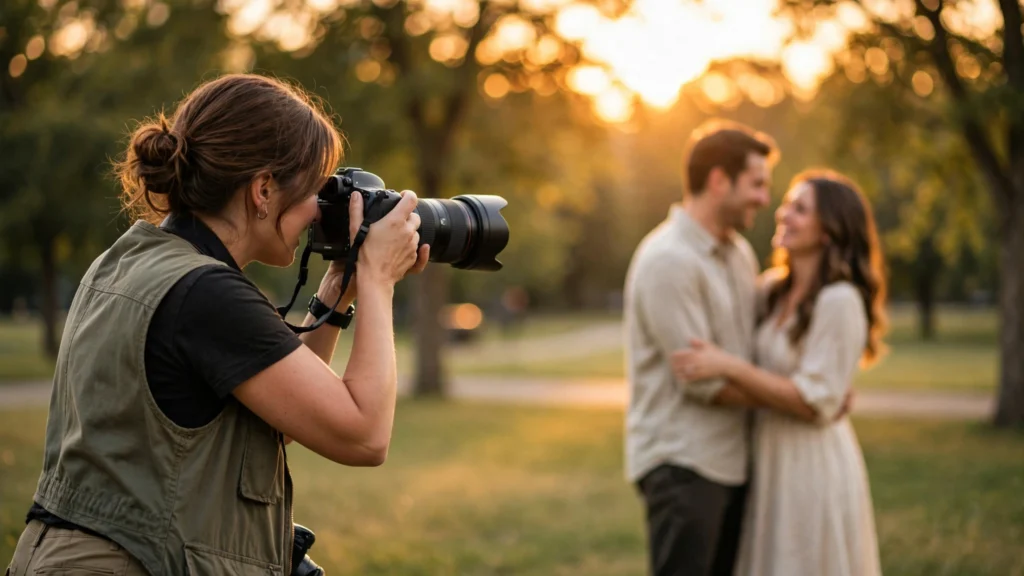

Searching for “photographers near me” is easy — finding the right photographer is the hard part. Google’s local results mix great pros with paid placements, and a pretty Instagram feed doesn’t tell you about contracts, backup plans, or turnaround times.
This 2026 guide is the complete playbook: where to search, every photographer type explained, 2026 pricing by type, how to evaluate portfolios, the exact questions to ask before hiring, red flags vs green flags, packages vs hourly rates, and tips for great photos — so you book with confidence.
How to Find Photographers Near You
- Google Maps / search: search “photographers near me” or “[type] photographer in [your city]”; check ratings, review counts, and how recent their photos are.
- Yelp: filtered reviews with real client photos — great for local portrait and event photographers.
- Thumbtack / Bark: describe your project and get matched quotes from local pros.
- Instagram: search location hashtags like #austinphotographer — you see real, recent work.
- Referrals: ask friends, venues (preferred-vendor lists), event planners, or real estate agents.
- Wedding directories: The Knot and WeddingWire for weddings specifically.
- Pro associations: Fearless Photographers and WPJA members must meet quality standards.
Warning: top spots on some directories are paid placements — high ranking doesn’t equal high quality. Always check the portfolio and reviews.
Types of Photographers (And Which You Need)
| Type | What they do | Typical use |
|---|---|---|
| Wedding | Full-day event coverage | Weddings |
| Portrait | Individuals, couples, families | Studio or outdoor sessions |
| Newborn / maternity | Specialized, safety-trained | Babies, pregnancy |
| Event | Parties, corporate, conferences | Events of all sizes |
| Headshot | Professional/business portraits | LinkedIn, acting, corporate |
| Real estate | Interiors, exteriors, twilight | Property listings |
| Product / commercial | E-commerce, branding, food | Businesses |
| Sports / action | Games, races, fast subjects | Athletes, events |
Match the specialist to the job. A great wedding photographer may be mediocre at newborns (which need safety training), and vice versa.
How Much Does a Photographer Cost? (2026 Pricing)
| Type | Typical range (US) |
|---|---|
| Wedding (full day, 8–10 hrs) | $2,000–$5,000+ (avg ~$2,900) |
| Portrait / family session | $150–$500 |
| Headshots | $100–$350 |
| Event (per day) | $500–$1,500 |
| Newborn session | $250–$500 |
| Real estate shoot | $150–$400 |
| Product / commercial (per day) | $500–$1,200+ |
| Engagement session | $200–$600 |
Money-saving facts: photography typically runs 8–12% of a wedding budget. Peak-season Saturdays (May–October) cost 20–40% more; weekday or off-season bookings save 30–50%. A second shooter adds $500–$1,500.
Packages vs Hourly Rates
| Packages | Hourly | |
|---|---|---|
| What | Fixed price bundling hours + edited images + extras | Pay per hour of coverage |
| Best for | Weddings, big events | Headshots, mini-sessions, small events |
| Value | Better for long days | Better for short sessions |
Always compare what’s included: hours, number of edited images, turnaround time, print rights, travel fees, and overtime rates.
How to Evaluate a Portfolio
- Consistency: cohesive style and quality across all work — not just the best shots.
- Full galleries: ask for 2–3 complete sessions, not Instagram highlights.
- Lighting versatility: day, night, indoor, harsh sun — can they handle your conditions?
- Your scenario: have they shot your venue type, skin tones, or event type?
- Emotional connection: do the photos feel natural and tell a story?
Questions to Ask Before Hiring a Photographer
- Is my date available? Will you personally shoot (not an associate)?
- Can I see 2–3 full galleries from recent shoots like mine?
- What’s your photography style — traditional, candid/photojournalistic, editorial?
- What’s included — hours, edited photo count, second shooter, album?
- Turnaround time — when do I get previews and the final gallery?
- What’s your backup plan if you’re sick or equipment fails?
- Do you carry liability insurance? (Many venues require it.)
- What are the contract terms — deposit, cancellation, rescheduling?
- Do I get print rights and full-resolution files?
- How do you handle low light / my venue’s conditions?
- Travel fees? Overtime rate?
Red Flags vs Green Flags
| 🚩 Red flag | ✅ Green flag |
|---|---|
| Only shows highlights, no full galleries | Shares complete galleries willingly |
| Vague about who will actually shoot | Confirms the shooter in writing |
| No backup plan | Named backup photographer ready |
| Slow, unprofessional communication | Prompt, professional replies |
| Verbal agreements only | Detailed written contract |
| Vague “a few months” delivery | Specific timeline in writing |
| Pricing changes mid-conversation | Transparent pricing from the start |
Tips for Getting Great Photos
- Golden hour: shoot ~1 hour after sunrise or before sunset for the most flattering light.
- Outfits: coordinate, don’t match; avoid neon, tiny patterns, and big logos; bring a backup option.
- Locations: ask your photographer for local hidden spots — they know where the light is good.
- Chemistry matters: meet or video-call first. An engagement or mini session before the big day builds comfort.
- Book early: popular photographers book months ahead — weddings: 6–12 months.
- Communicate your must-haves: family groupings, specific moments, Pinterest boards — share them in advance.
- Trust the pro: micromanaging every shot kills candid magic. Give direction, then let them work.
Understanding Contracts and Rights
- Deposit: typically 20–50% to hold your date; know the refund policy.
- Print rights vs copyright: most photographers keep copyright but grant you personal print rights — confirm this in writing.
- Social media: clarify whether you can post (and whether they’ll tag you).
- Raw files: most pros don’t deliver unedited raws — that’s normal, not a red flag.
- Cancellation/rescheduling: know the terms before you sign, not after.
Wedding Photographer Deep Dive
Weddings are the biggest photography investment most people make — worth extra care:
- Style match matters most: traditional (posed), photojournalistic (candid), editorial (fashion-like), or fine art. Pick the style whose galleries you can’t stop scrolling.
- Full-day vs partial: 8–10 hours covers getting-ready through reception; 4–6 hours suits elopements and small weddings.
- Second shooter: worth it for 100+ guests — simultaneous getting-ready coverage and ceremony angles.
- Engagement session: doubles as a trial run — you learn how you photograph and how you work together.
- Albums: decide now or later? Ordering through your photographer usually gets better print quality than DIY books.
- Timeline planning: good photographers help build the day’s schedule around light — ask for their input.
How to Negotiate (Without Being Rude)
- Don’t haggle the rate — do ask about customizing the package (fewer hours, no album, digital-only).
- Off-season/weekday: legitimately cheaper — ask what’s available.
- Shorter coverage: a 6-hour package costs less than 10; be realistic about what you need.
- Referrals: some photographers offer referral discounts — ask.
- Never ask for free work (“exposure”) — it’s insulting and burns bridges.
After the Shoot: What to Expect
- Sneak peeks: many photographers share a handful of edited previews within 48 hours–1 week.
- Full gallery: typically 2–8 weeks for portraits, 6–12 weeks for weddings — in writing, per your contract.
- Gallery format: online gallery for viewing/sharing/downloading; print release included.
- Prints: order through the photographer for color-accurate professional prints, or use the print release at a quality lab.
- Backup your files: download everything and back it up in two places — photographers aren’t permanent archives.
- Reviews: leave an honest review — it’s the currency photographers live on.
Frequently Asked Questions
How do I find a good photographer near me?
Start with Google Maps (ratings + recent photos), Yelp, and Instagram location hashtags like #austinphotographer. Ask friends and venues for referrals, and check pro associations (Fearless Photographers, WPJA) for vetted wedding pros. Always review full galleries, not just highlights.
How much does it cost to hire a photographer?
Typical US ranges: weddings $2,000–$5,000+, portrait sessions $150–$500, headshots $100–$350, events $500–$1,500/day, newborn $250–$500. Weekday/off-season bookings can save 30–50% on weddings.
What should I ask a photographer before hiring?
Key questions: who will shoot (in writing), full galleries from similar shoots, what’s included (hours, edited count, second shooter), turnaround time, backup plan, insurance, contract terms, and print rights.
What’s the difference between photography packages and hourly rates?
Packages bundle hours, edited images, and extras at a fixed price — better value for weddings and big events. Hourly suits short sessions like headshots. Always compare what’s included: edited-image count, turnaround, travel fees, overtime.
How far in advance should I book a photographer?
Weddings: 6–12 months ahead (popular photographers book fast). Portraits/events: 1–3 months. Headshots/mini-sessions: 2–4 weeks. Peak-season Saturdays go first.
Conclusion
Finding a great photographer near you comes down to three things: search smart (Maps, Yelp, Instagram, referrals — not just paid directory rankings), evaluate honestly (full galleries, consistency, your scenario), and ask the hard questions (backup plan, contract, turnaround) before you sign.
Do that, and you won’t just find a photographer near you — you’ll find yours.
Explore more on StarsInfos.