
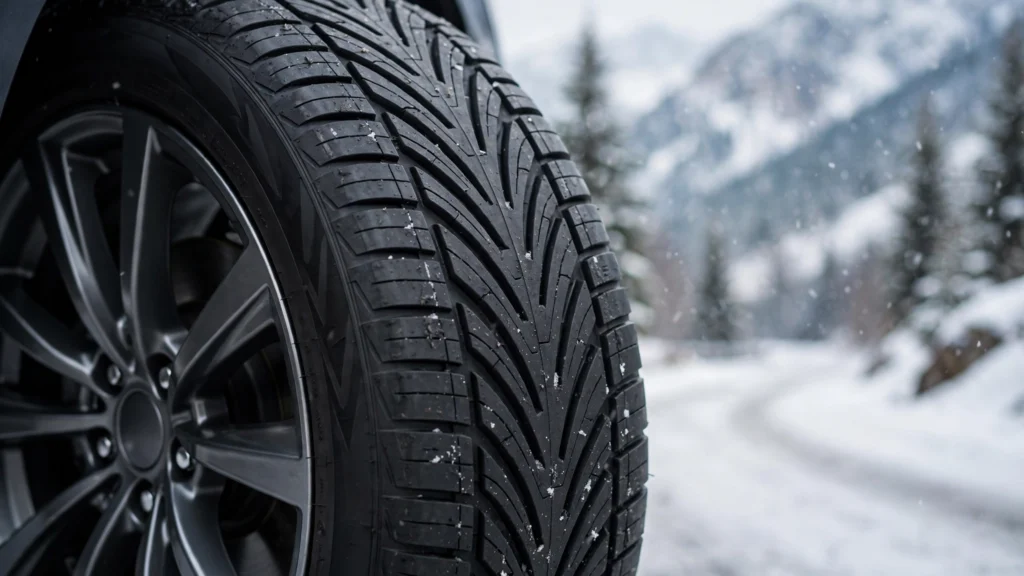

The Michelin CrossClimate2 is the tire that killed the seasonal changeover for millions of drivers: a Grand Touring all-season tire with a genuine severe-snow (3PMSF) rating — one set, year-round, through rain, dry heat, and real winter. But at a premium price, is it actually worth it?
This 2026 review covers everything about the CrossClimate2: key technologies, full specs (UTQG, warranty, sizes), independent test results, head-to-head vs Bridgestone WeatherPeak, Goodyear WeatherReady 2, and Pirelli, CC2 vs CC2 SUV vs Defender, the honest winter-tire reality check, pros/cons, pricing, and where to buy.
What Is the Michelin CrossClimate2?
Launched in late 2020 (on sale 2021), the CrossClimate2 is Michelin’s flagship “all-weather” tire — an all-season with the Three-Peak Mountain Snowflake (3PMSF) severe-snow certification. The idea: one set of tires for all four seasons, no winter changeover needed.
Key Technologies
- V-formation directional tread: evacuates water and slush fast — the secret behind its wet-weather dominance.
- Thermal Adaptive compound: stays flexible in cold for winter grip, firm in heat for dry handling.
- 3D full-depth sipes: biting edges for snow and ice that don’t sacrifice dry-road rigidity.
- Piano Noise Reduction tuning: tread pitch sequencing keeps it quiet when new.
- Polyamide reinforcement: high-speed stability under load.
Michelin’s claims (vs 4 leading competitors): up to 56 ft shorter wet braking, 16 ft shorter dry braking, and up to 15,000 extra miles of treadwear (~1 extra year of use).
Specs at a Glance
| Spec | Detail |
|---|---|
| Type | Grand Touring All-Season (all-weather, 3PMSF) |
| UTQG | 640 B A (most sizes) |
| Treadwear warranty | 60,000 miles |
| Standard warranty | 6 years |
| Satisfaction guarantee | 60 days |
| Sizes | ~16–20 inch; cars, CUVs, small SUVs |
| Common fitments | 215/55R17 (Camry/Accord), 225/65R17 (RAV4/CR-V) |
Test Results: How It Actually Performs
| Test | Result |
|---|---|
| Tire Rack survey (5,400+ ratings) | 9.0–9.4/10 “Excellent” — wet 9.4, dry 9.4, snow 8.8, comfort 8.9, treadwear 9.1; 100% recommended |
| Car and Driver 2026 all-weather test | 2nd place (251 pts); swept every wet test (shortest wet braking: 148.5 ft) |
| Consumer Reports | Top pick for mid-size SUVs — “almost as capable as a winter tire in snow” |
| Jalopnik / TyreReviews | “The tire to beat” among all-weather tires |
CrossClimate2 vs the Competition
| Tire | Strengths | Weaknesses |
|---|---|---|
| Michelin CrossClimate2 | Best wet/dry braking; strong worn-snow traction; long treadwear | Premium price; ice grip trails dedicated winters |
| Bridgestone WeatherPeak | Best snow acceleration in C&D test; 70k-mile warranty | Weaker dry braking; didn’t live up to hype overall |
| Goodyear Assurance WeatherReady 2 | Strong wet/dry (class-leading claims); 3PMSF | Tied with Pirelli; less snow-focused |
| Pirelli WeatherActive | Best comfort and ice in some tests | Less dominant overall |
| Nokian Remedy WRG5 | Best for serious winter | Weaker braking |
Bottom line: independent testers still call the CrossClimate2 “the tire to beat” — especially if wet-weather safety is your priority.
The Winter Tire Reality Check
Can the CrossClimate2 replace dedicated winter tires? Honest answer: for most drivers, yes — but not in extreme conditions.
| Test (Tire Rack 2026) | CrossClimate2 | Michelin X-Ice Snow (winter) |
|---|---|---|
| Snow braking (25–0 mph) | 72.4 ft | 56.1 ft |
| Ice braking (12–0 mph) | 53.0 ft | 39.4 ft |
| Wet braking | 99.6 ft | 129.0 ft |
The gap on snow and ice is real — 16+ feet on snow, 13+ feet shorter on ice. But the CC2 crushes winter tires on wet roads, which is where most winter driving actually happens. Rule of thumb: CC2 for snow-belt regions without sustained ice; dedicated winters for extreme cold and icy climates.
Understanding the 3PMSF Rating
The Three-Peak Mountain Snowflake (3PMSF) symbol means a tire passed the ASTM F1805 severe-snow traction test — at least 110% of the traction of a reference all-season tire in medium-packed snow.
- 3PMSF ≠ winter tire: it’s a minimum severe-snow standard, not winter-tire equivalence.
- M+S (mud and snow): a weaker, self-certified marking — nearly all all-seasons have it. 3PMSF is the meaningful one.
- Legal weight: some regions (e.g., Quebec, parts of Europe) require 3PMSF or winter tires in winter months.
Who Should (and Shouldn’t) Buy the CrossClimate2
Buy it if:
- You drive through four real seasons and want one set year-round.
- Wet-weather safety is a priority (its strongest suit).
- You hate seasonal changeovers and storage hassles.
- You drive a sedan, crossover, or small SUV.
Skip it if:
- You face sustained ice or extreme cold — get dedicated winters.
- You need LT/off-road sizes — it doesn’t come in them.
- You’re on a tight budget — quality all-seasons cost less (with less snow ability).
- You already own winter wheels — a summer/winter combo still wins on ultimate performance.
Noise: What Owners Actually Say
The CrossClimate2 is quiet when new (Piano Noise Reduction tuning works). Long-term owner reports are mixed:
- Many report it stays quiet with proper rotation and alignment.
- Some report noise increasing as it wears — common with aggressive directional treads.
- Verdict: quieter than most all-terrains and winter tires; on par with or slightly louder than premium touring tires when worn.
CrossClimate2 vs CrossClimate2 SUV
| CrossClimate2 | CrossClimate2 SUV | |
|---|---|---|
| For | Cars, small CUVs | Larger crossovers and SUVs |
| Sizes | ~16–20 inch | Larger sizes (e.g., 265/50R19) |
| Load ratings | Standard | Higher (heavier vehicles) |
| Tech | Same core technologies | Same, tuned for weight |
Buy the SUV variant if you drive a larger/heavier crossover or SUV — the standard CC2 isn’t rated for the load.
CrossClimate2 vs Michelin Defender: Which Should You Buy?
| CrossClimate2 | Defender T+H / Defender2 | |
|---|---|---|
| Category | All-weather (3PMSF snow rated) | Touring all-season (no 3PMSF) |
| Snow | Genuine snow capability | Light snow only |
| Treadwear focus | Long (60k miles) | Longer (longevity-first design) |
| Best for | Four-season climates | Mild climates, max longevity |
Choose the CrossClimate2 if you see real winter. Choose the Defender if you live somewhere mild and want the longest-lasting tire possible.
Pros and Cons
| ✅ Pros | ❌ Cons |
|---|---|
| Genuine 3PMSF all-weather capability | Premium price |
| Class-leading wet and dry braking | Ice grip trails dedicated winters |
| Strong snow traction even when worn | No LT/off-road sizes |
| 60k-mile treadwear warranty | Some owners report noise increasing with wear |
| Excellent hydroplaning resistance | Directional tread (rotation patterns limited) |
| Quiet when new |
Pricing and Where to Buy
Expect roughly $170–$490 per tire depending on size (common sizes run $230–$350). A set of four typically lands $900–$1,400 installed.
- Tire Rack — full test data, verified reviews, installer network.
- Discount Tire — competitive pricing, price-match.
- Costco — periodic Michelin promos with free shipping.
- SimpleTire — good for hard-to-find sizes.
- Local dealers — worth a quote; mounting/balancing often bundled.
Maintenance Tips
- Rotate every 5,000–7,500 miles — directional tread, so front-to-back on the same side.
- Check pressure monthly — underinflation kills treadwear and wet grip.
- Alignments matter — uneven wear voids the mileage warranty’s value.
- Replace at 4/32″ for winter use — the 3PMSF rating assumes adequate tread.
- Keep the receipt — the 60k-mile warranty needs proof of rotation.
Frequently Asked Questions
Is the Michelin CrossClimate2 a good tire?
Yes — it’s the benchmark all-weather tire. Independent tests (Car and Driver, Consumer Reports, Tire Rack surveys) consistently rank it at or near the top for wet braking, dry handling, snow traction, and treadwear. Owners rate it 9.0–9.4/10 with 100% recommending it.
How long do Michelin CrossClimate2 tires last?
Michelin backs it with a 60,000-mile treadwear warranty, and independent testing showed it outlasting competitors by up to 15,000 miles. Real-world life depends on driving style, alignment, and rotation discipline — most owners report 50,000–65,000 miles.
Is the CrossClimate2 good in snow? Does it replace winter tires?
Very good in snow for an all-season — 3PMSF rated, and Consumer Reports calls it “almost as capable as a winter tire in snow.” But dedicated winters still stop 16+ feet shorter on snow and 13+ feet shorter on ice. For most snow-belt drivers it’s enough; for sustained ice and extreme cold, get winters.
What’s the difference between CrossClimate2 and CrossClimate2 SUV?
Same core technologies; the SUV version is tuned for heavier vehicles with higher load ratings and larger sizes. Buy the SUV variant for larger crossovers and SUVs.
Michelin CrossClimate2 vs Defender — which should I buy?
CrossClimate2 for four-season climates with real winter (3PMSF snow rating). Defender for mild climates where maximum treadwear longevity matters more than snow capability.
Conclusion
The Michelin CrossClimate2 earns its reputation: the all-weather tire to beat — class-leading wet braking, genuine snow capability, and a 60,000-mile warranty in one set. The premium price stings, but you’re buying the end of seasonal changeovers and top-tier wet-weather safety.
If you drive a sedan, crossover, or small SUV through four real seasons and don’t face sustained ice, this is the tire. If your winters are truly brutal, pair the logic with dedicated winters — but for everyone else, the CrossClimate2 is the one-set answer.
Explore more on StarsInfos.